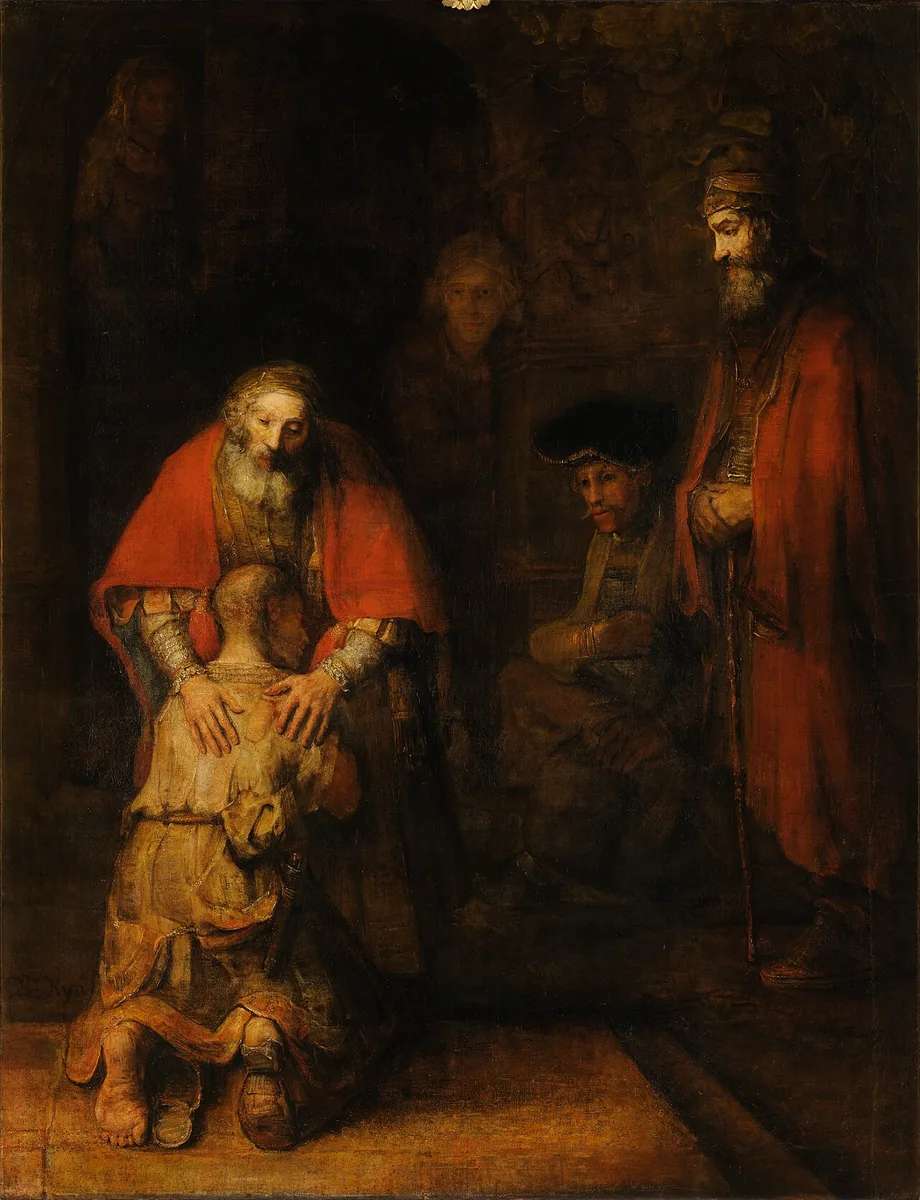
The Return of the Prodigal Son
Match for you
Rate 5 more paintings to see how well this one matches your taste.
Where to see it
Hermitage Museum, Saint Petersburg
About the painting
The Return of the Prodigal Son (Dutch: De terugkeer van de verloren zoon) is an oil painting by Rembrandt, part of the collection of the Hermitage Museum in St. Petersburg. It is among the Dutch master's final works, likely completed within two years of his death in 1669. Depicting the moment of the prodigal son's return to his father in the Biblical parable, it is a renowned work described by art historian Kenneth Clark as "a picture which those who have seen the original in St. Petersburg may be forgiven for claiming as the greatest picture ever painted".
Read more
In the painting, the son has returned home in a wretched state from travels in which he has wasted his inheritance and fallen into poverty and despair. He kneels before his father in repentance, wishing for forgiveness and the position of a servant in his father's household, having realized that even his father's servants had a better station in life than he. His father receives him with a tender gesture and welcomes him as his own son. His hands seem to suggest mothering and fathering at once; the left appears larger and more masculine, set on the son's shoulder, while the right is softer and more receptive in gesture. Standing at the right is the prodigal son's older brother, who crosses his hands in judgment; in the parable he objects to the father's compassion for the sinful son:
But he answered his father, "Listen! For all these years I have been working like a slave for you, and I have never disobeyed your command, yet you have never given me even a young goat so that I might celebrate with my friends. But when this son of yours came back, who has devoured your assets with prostitutes, you killed the fatted calf for him!"—Luke 15:29–30, NRSV
The father explains, "But it was appropriate to celebrate and be glad, for this, your brother, was dead, and is alive again. He was lost, and is found" (Luke 15:32).
Rembrandt was moved by the parable, and he made a variety of drawings, etchings, and paintings on the theme that spanned decades, beginning with a 1636 etching (see Gallery). The Return of the Prodigal Son includes figures not directly related to the parable but seen in some of these earlier works; their identities have been debated. The woman at top left, barely visible, is likely the mother, while the seated man, whose dress implies wealth, may be an advisor to the estate or a tax collector.
Source: Wikipedia · CC BY-SA 4.0
Similar works
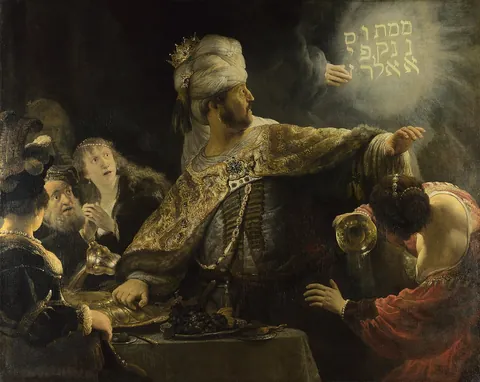 Belshazzar's Feast
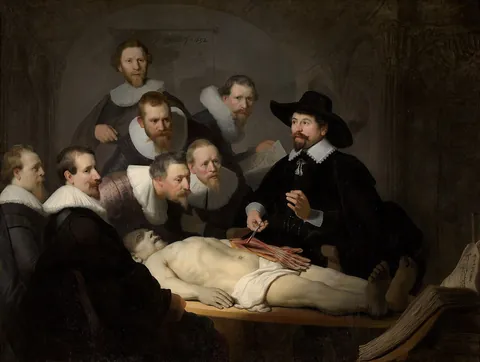 The Anatomy Lesson of Dr. Nicolaes Tulp
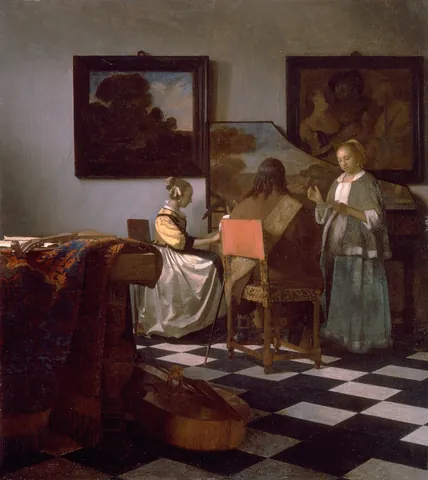 The Concert
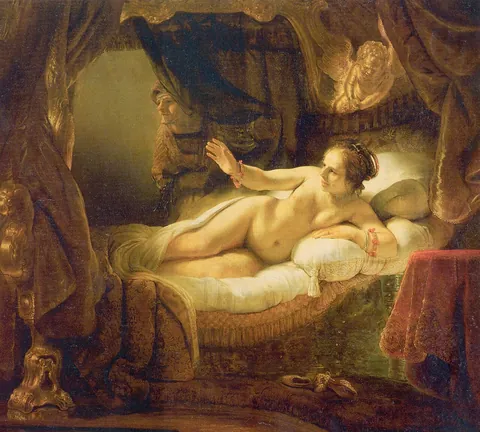 Danaë
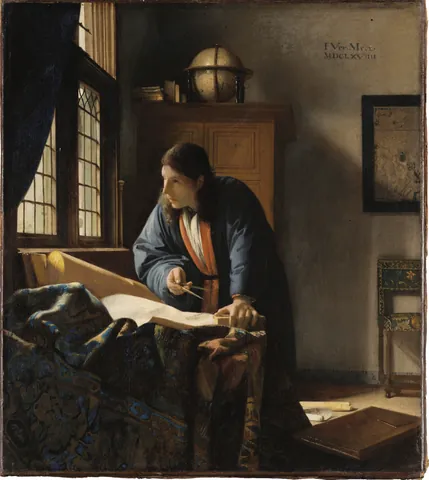 The Geographer
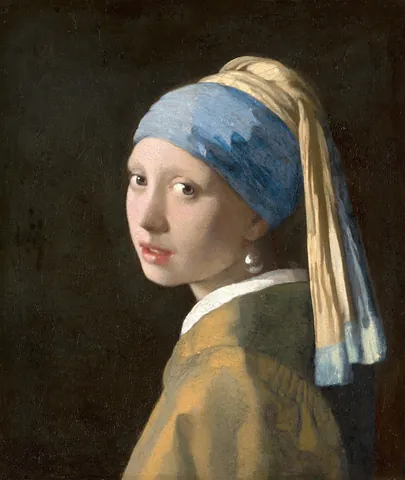 Girl with a Pearl Earring
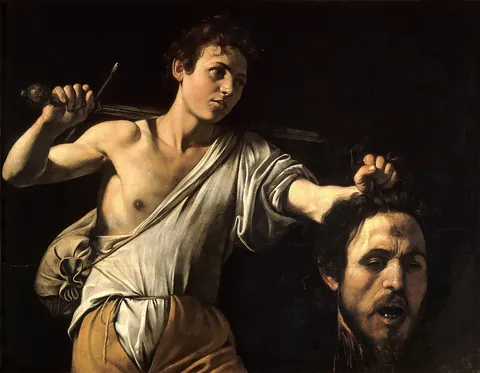 David with the Head of Goliath (Kunsthistorisches Museum)
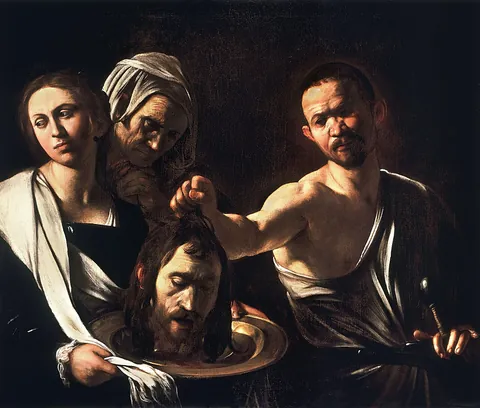 Salome with the Head of John the Baptist
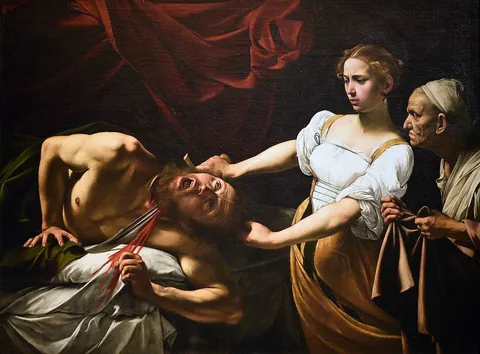 Judith Beheading Holofernes
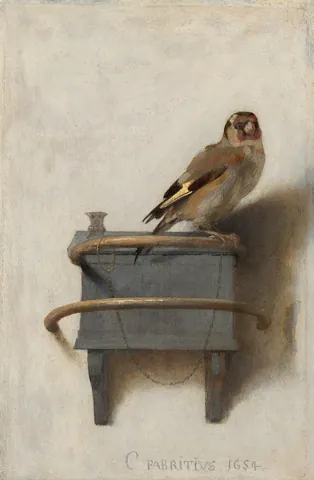 The Goldfinch
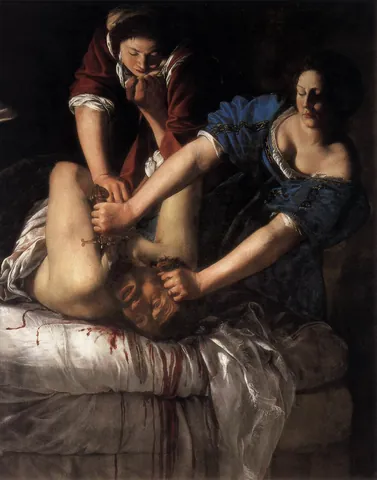 Judith Slaying Holofernes
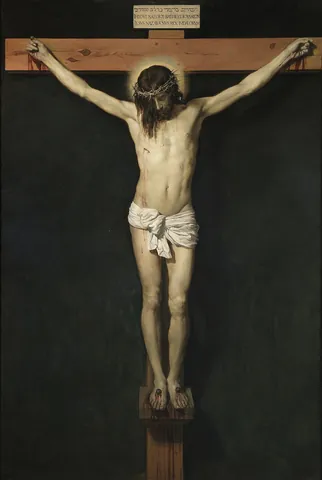 Christ Crucified
Image: Rembrandt; Wikimedia Commons · public domain