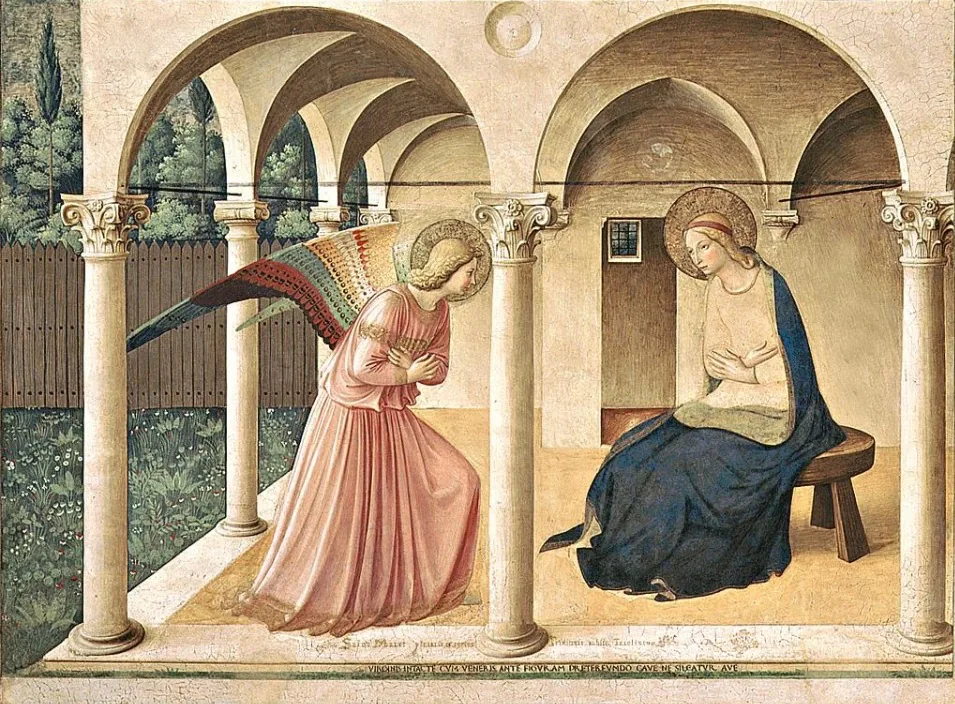
Annunciation (San Marko muzeyi)
Sizinlə uyğunluq
Daha 5 rəsmi qiymətləndirin - bu əsərin zövqünüzə nə qədər uyğun olduğunu görəcəksiniz.
Harada baxmaq olar
San Marko muzeyi, Florensiya
Rəsm haqqında
Azərbaycan dilində təsvir hələ yoxdur - ingilis dilində göstəririk.
The Annunciation (c. 1440–1445) is an Early Renaissance fresco by Fra Angelico in the Convent of San Marco in Florence, Italy. When Cosimo de' Medici rebuilt the convent, he commissioned Fra Angelico to decorate the walls with intricate frescos. This included the altarpiece, the inside of the friars' cells, the friars' cloister, the chapter house, and inside the corridors; around fifty pieces in total. All of the paintings were done by Angelico himself or under his direct supervision. Out of all of the frescos at the convent, the Annunciation is the most well known in the art world.
Tam oxu
The Annunciation is not Fra Angelico's first painting on that theme nor his only one in the convent. His works are scattered across the world in well-known museums and galleries including the Prado. He is credited as the inventor of this type of composition, where Gabriel visits Mary in an outdoor setting. A typical Gothic Annunciation painting contained the archangel Gabriel visiting the Virgin Mary indoors and with Mary enthroned. The figures would appear flat, static, and unrealistic. This painting in particular is supposed to have "achieved heights of singular elegance." The way it handles space and lighting is revolutionary because it is a transition out of the Gothic period and into the Renaissance. Previous versions had no spatial awareness. The figures seemed to float in the air, and lines did not end in a vanishing point. This caused them to be lopsided and disproportional.
This particular version of the Annunciation is located at the top of the stairs on the first floor where the San Marco dormitories are located - on the north side. This is one of only three frescoes that Fra Angelico painted outside on the walls of the corridor instead of inside the cells. The staircase has undergone many renovations including modifications to the window which affects the amount of light entering the convent. This fresco was meant to be viewed under low light. When viewing the painting, there is an invisible light source that would have made additional light unnecessary to the friars viewing the painting. If visitors to the convent viewed the painting today, it would not look authentic. There are now lights illuminating it from many different angles. With its placement at the top of the stairs Fra Angelico sought to bring the scene into the convent and into the daily lives of the friars. A lighter painting at the time would have been used for decoration, while a darker one was meant for reflection and prayer.
Mənbə: Vikipediya · CC BY-SA 4.0
Oxşar əsərlər
Şəkil: Fra Angelico; Wikimedia Commons · ictimai mülkiyyət