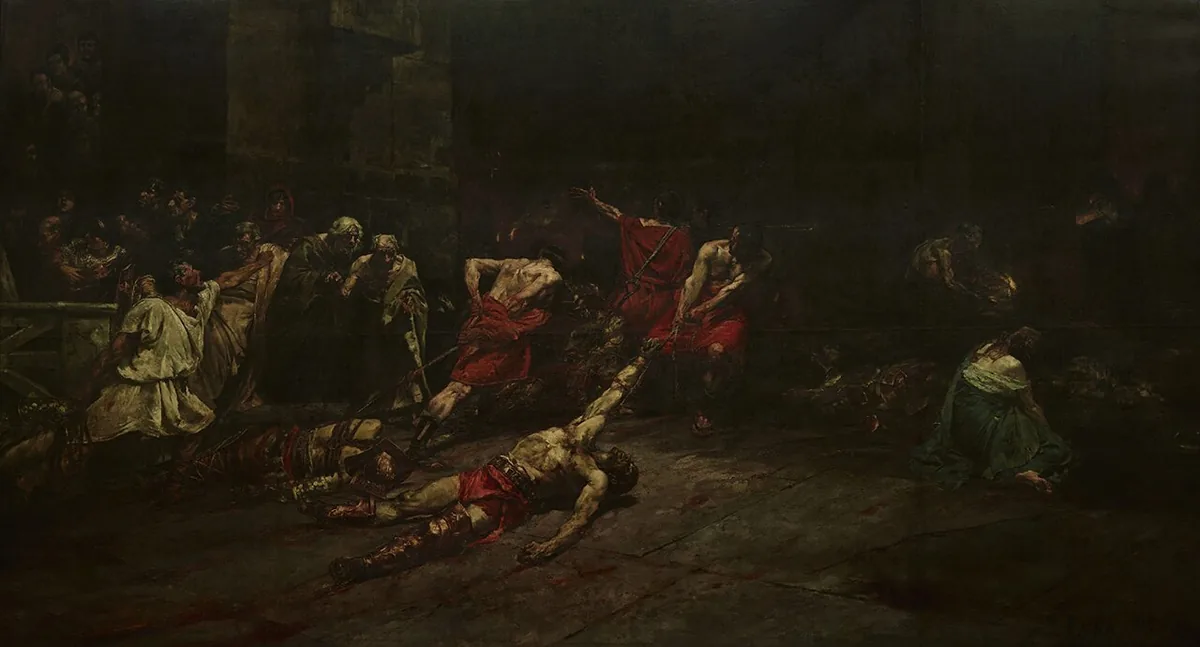
Spoliarium
Совпадение с вами
Оцените ещё 5 картин - и увидите, насколько эта работа в вашем вкусе.
Где посмотреть
National Museum of the Philippines, Манила
О картине
Описания на русском пока нет - показываем на английском.
The Spoliarium is a painting by Filipino painter Juan Luna. Luna, working on canvas, spent eight months completing the painting which depicts dying gladiators. The painting was submitted by Luna to the Exposición Nacional de Bellas Artes in 1884 in Madrid, where it garnered the first gold medal (out of three). The picture recreates a despoiling scene in a Roman circus where dead gladiators are stripped of weapons and garments. Together with other works of the Spanish Academy, the Spoliarium was on exhibit in Rome in April 1884.
Читать полностью
In 1886, the painting was sold to the provincial government of Barcelona for 20,000 pesetas. It is currently displayed in the main gallery at the first floor of the National Museum of Fine Arts in Manila, and is the first work of art that greets visitors upon entry into the museum. The National Museum considers it the largest painting in the Philippines with dimensions of 4.22 meters x 7.675 meters.
Filipino historian Ambeth Ocampo writes, "...the fact remains that when Luna and Félix Resurrección Hidalgo won the top awards in the Madrid Exposition of 1884, they proved to the world that indios could, despite their supposed barbarian race, paint better than the Spaniards who colonized them."
Источник: Википедия · CC BY-SA 4.0
Похожие работы




Изображение: Juan Luna; Wikimedia Commons · общественное достояние