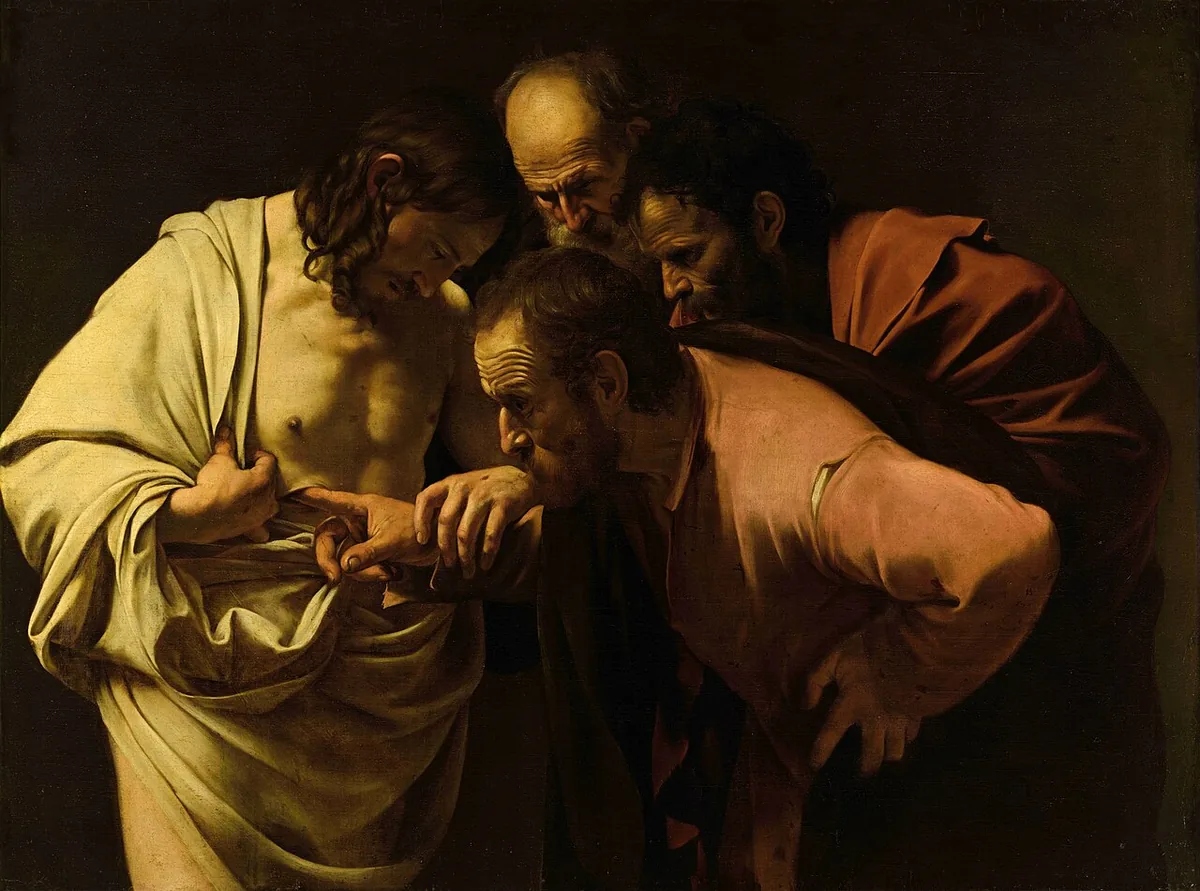
The Incredulity of Saint Thomas
Sizinlə uyğunluq
Daha 5 rəsmi qiymətləndirin - bu əsərin zövqünüzə nə qədər uyğun olduğunu görəcəksiniz.
Harada baxmaq olar
Sanssouci Picture Gallery, Potsdam
Rəsm haqqında
Azərbaycan dilində təsvir hələ yoxdur - ingilis dilində göstəririk.
The Incredulity of Saint Thomas is an oil canvas painting by Caravaggio, created c. 1601–1602. It was painted for Vincenzo Giustiniani (noted by Giovanni Pietro Bellori) and later entered the Royal Collection of Prussia, survived the Second World War unscathed, and is now in the Sanssouci Picture Gallery, in Potsdam.
Tam oxu
It shows the episode that gave rise to the term "Doubting Thomas" which, formally known as the Incredulity of Thomas, had been frequently represented in Christian art since at least the 5th century, and used to make a variety of theological points. According to the Gospel of John, Thomas the Apostle missed one of Jesus's appearances to the Apostles after his resurrection, and said "Unless I see the nail marks in his hands and put my finger where the nails were, and put my hand into his side, I will not believe it." A week later, Jesus appeared and told Thomas to touch him and stop doubting. Then Jesus said, "Because you have seen me, you have believed; blessed are those who have not seen and yet have believed."
The painting shows in a demonstrative gesture how the doubting apostle puts his finger into Christ's side wound, the latter guiding his hand. The unbeliever is depicted like a peasant, dressed in a robe torn at the shoulder and with dirt under his fingernails. The composition of the picture is such that the viewer is directly involved in the event and feels the intensity of the process.
The light falling on Christ emphasizes his physicality and at the same time suggests his divinity and significance to the viewer. Caravaggio was a master of light and shadow, and he uses this chiaroscuro to create a narrative through line in this piece. The shadows (representing doubt) sweep over St. Thomas, but as he touches Christ he is drawn into the light.
Mənbə: Vikipediya · CC BY-SA 4.0
Oxşar əsərlər
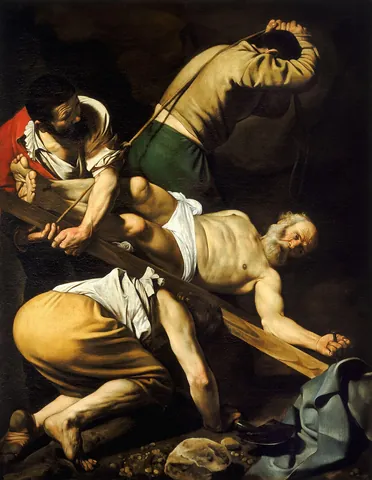 Crucifixion of Saint Peter
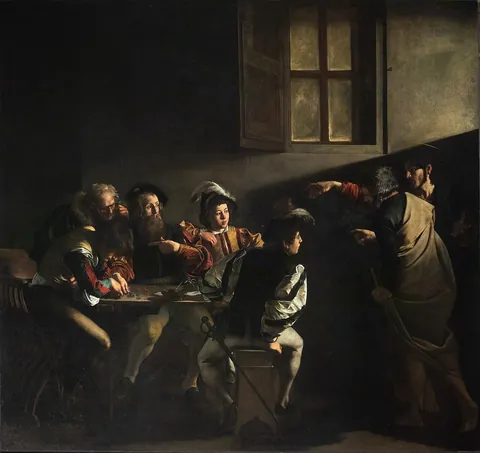 The Calling of Saint Matthew
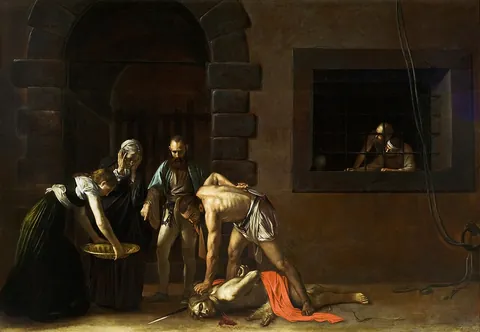 The Beheading of Saint John the Baptist
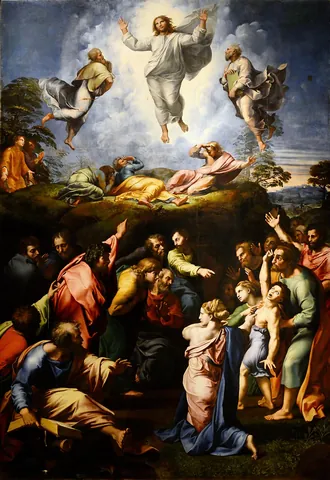 Transformasiya
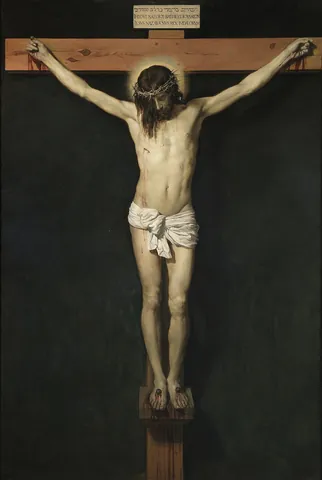 Christ Crucified
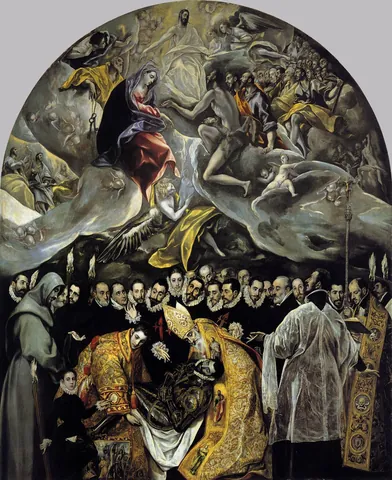 Qraf Orqasın dəfni
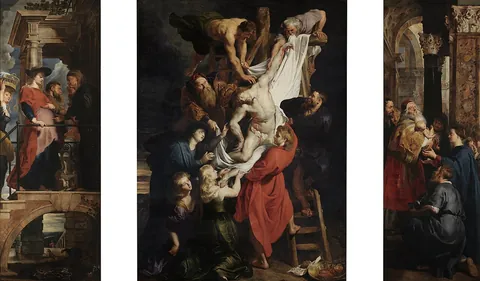 The Descent from the Cross (Müqəddəs Məryəm kafedralı (Antverpen))
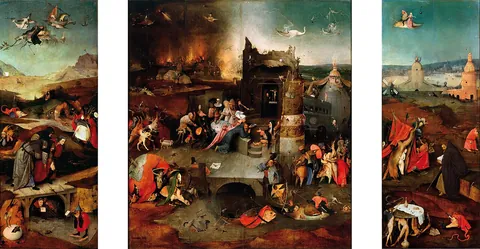 Triptych of the Temptation of St. Anthony
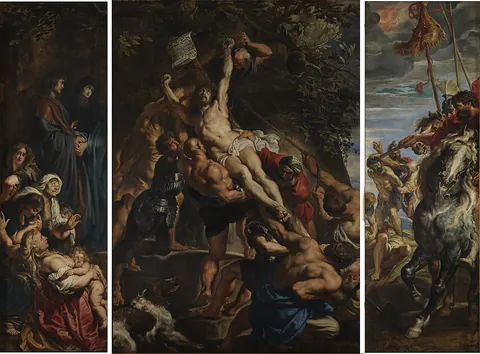 The Elevation of the Cross
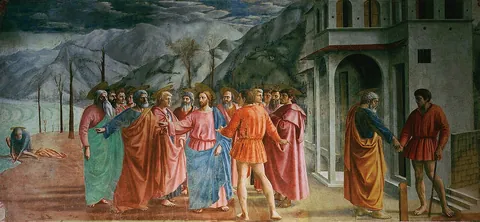 The Tribute Money
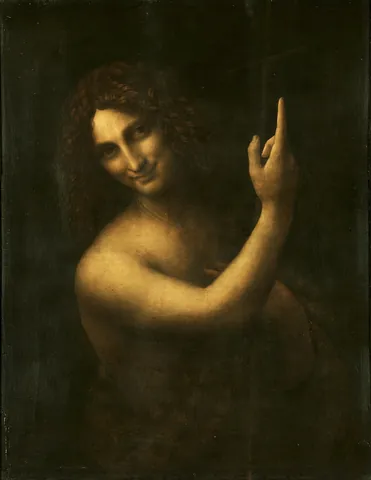 Saint John the Baptist
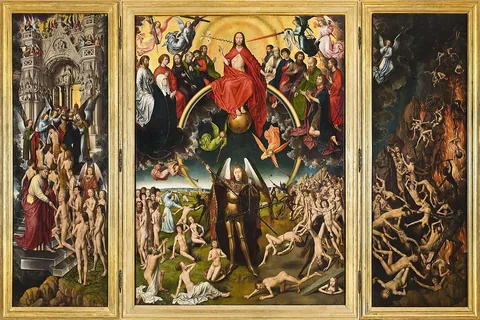 The Last Judgment (National Museum in Gdańsk)
Şəkil: Caravaggio; Wikimedia Commons · ictimai mülkiyyət