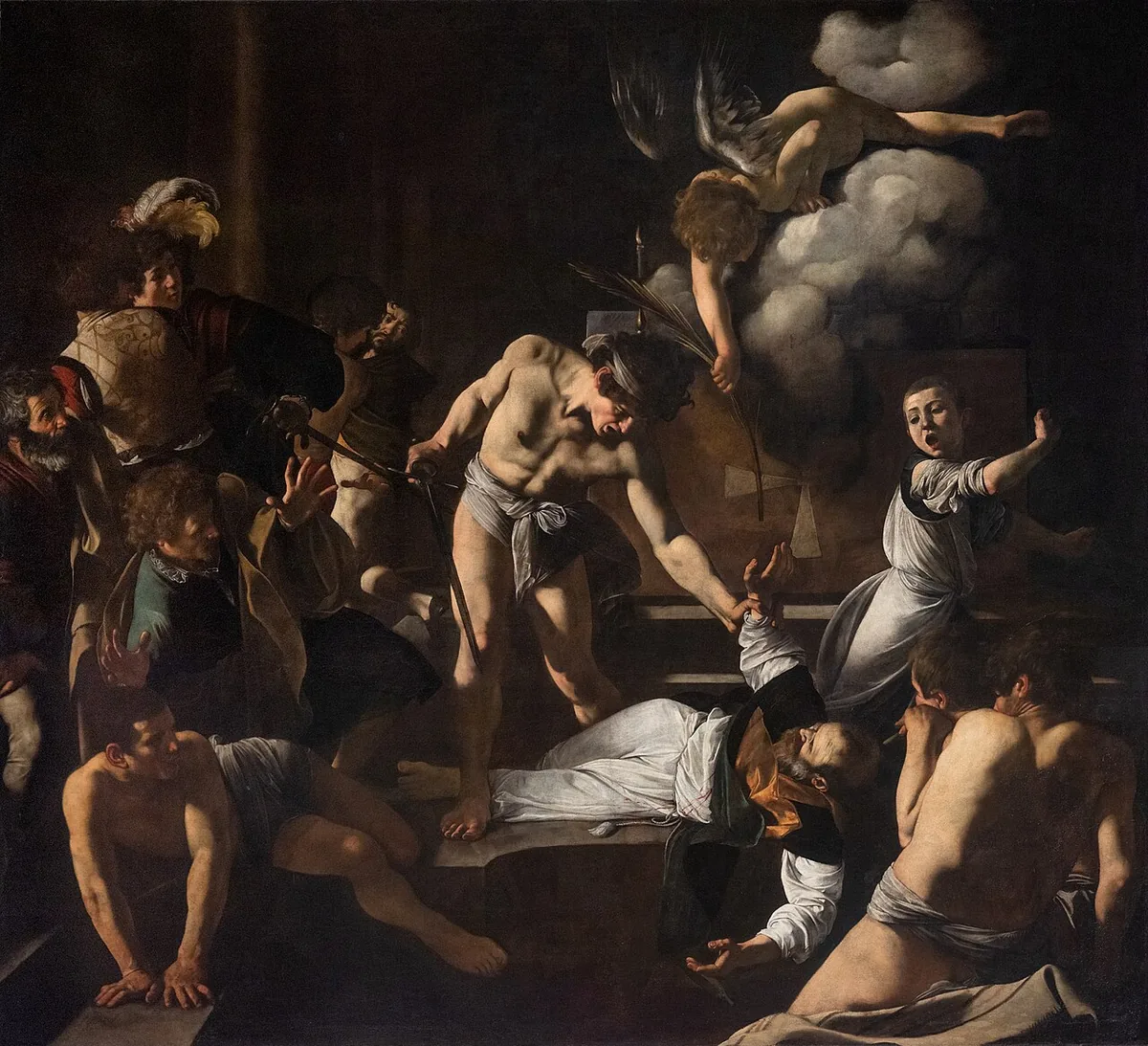
The Martyrdom of Saint Matthew
Match for you
Rate 5 more paintings to see how well this one matches your taste.
Where to see it
San Luigi dei Francesi, Rome
About the painting
The Martyrdom of Saint Matthew (Italian: Martirio di San Matteo; 1599–1600) is a painting by the Italian master Michelangelo Merisi da Caravaggio. It is located in the Contarelli Chapel of the church of the French congregation San Luigi dei Francesi in Rome, where it hangs opposite The Calling of Saint Matthew and beside the altarpiece The Inspiration of Saint Matthew, both by Caravaggio. It was the first of the three to be installed in the chapel, in July 1600.
Read more
The painting shows the martyrdom of Saint Matthew the Evangelist, author of the Gospel of Matthew. According to tradition, the saint was killed on the orders of the king of Ethiopia while celebrating Mass at the altar. The king lusted after his own niece, and had been rebuked by Matthew, for the girl was a nun, and therefore the bride of Christ. Cardinal Matthieu Cointerel, who had died several decades earlier, had laid down very explicitly what was to be shown: the saint being murdered by a soldier sent by the wicked king, some suitable architecture, and crowds of onlookers showing appropriate emotion. (See the article on the Contarelli Chapel).
The commission (which, strictly speaking, was from his patron, Cardinal Francesco Maria del Monte, rather than from the church itself), caused Caravaggio considerable difficulty, as he had never painted so large a canvas, nor one with so many figures. X-rays reveal two separate attempts at the composition before the one we see today, with a general movement towards simplification through reduction in the number of figures, and reduction – ultimately elimination – of the architectural element.
The figure in the background, about left-centre and behind the assassin, is a self-portrait by Caravaggio.
Source: Wikipedia · CC BY-SA 4.0
Similar works
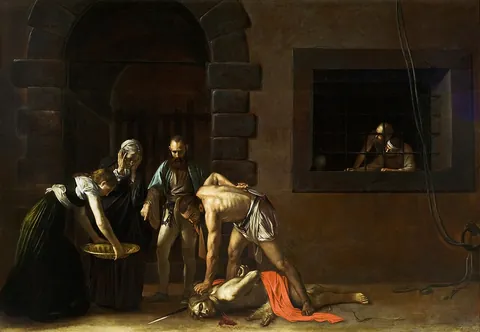 The Beheading of Saint John the Baptist
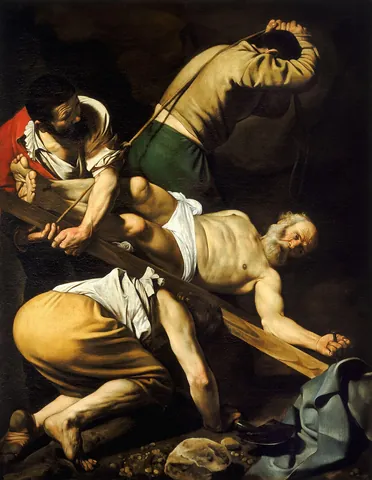 Crucifixion of Saint Peter
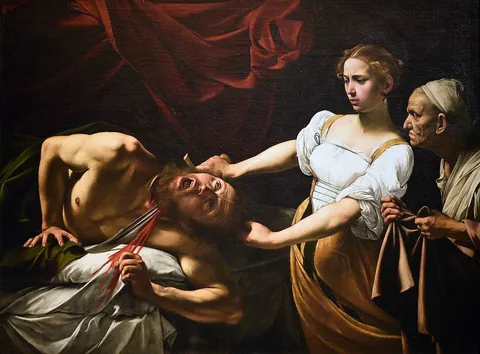 Judith Beheading Holofernes
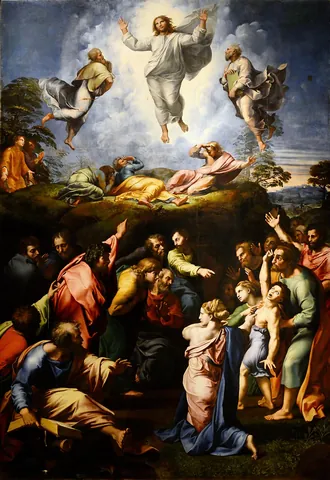 Transfiguration
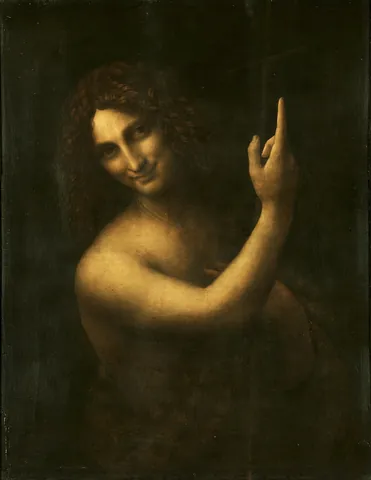 Saint John the Baptist
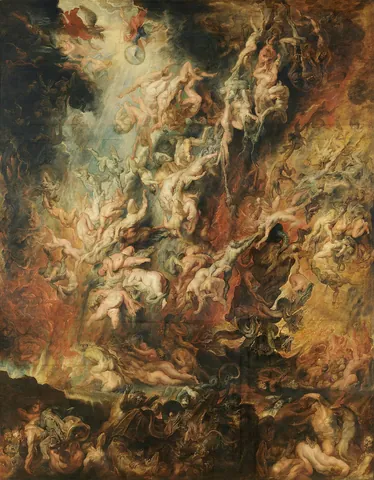 The Fall of the Damned
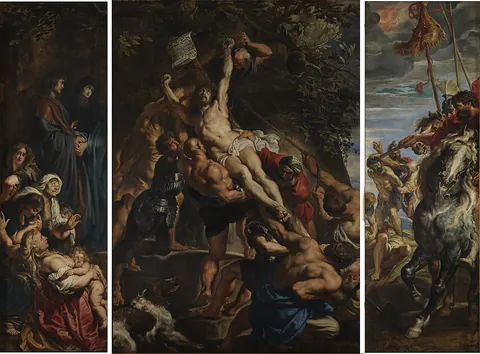 The Elevation of the Cross
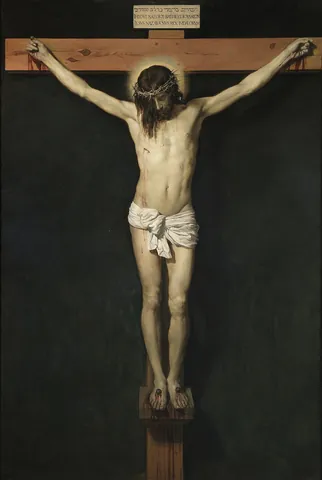 Christ Crucified
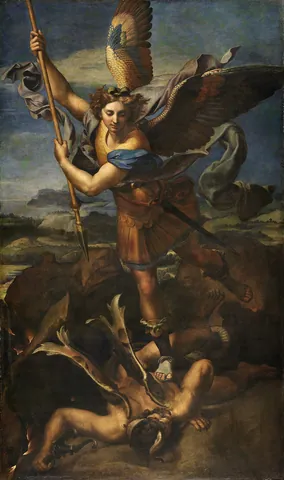 Saint Michael Vanquishing Satan
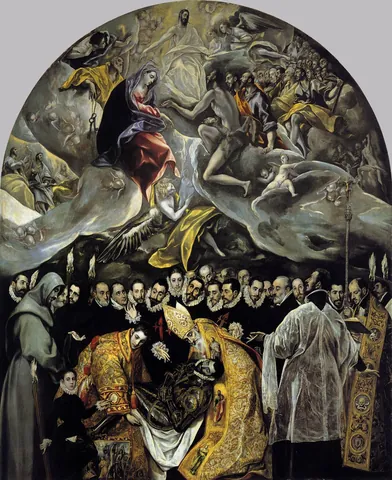 The Burial of the Count of Orgaz
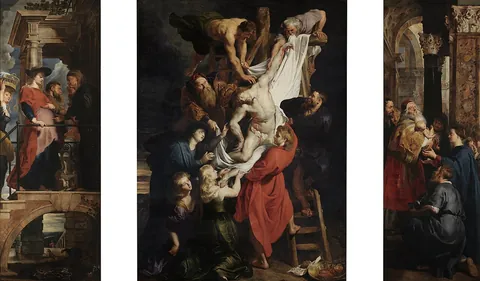 The Descent from the Cross (Onze-Lieve-Vrouwekathedraal)
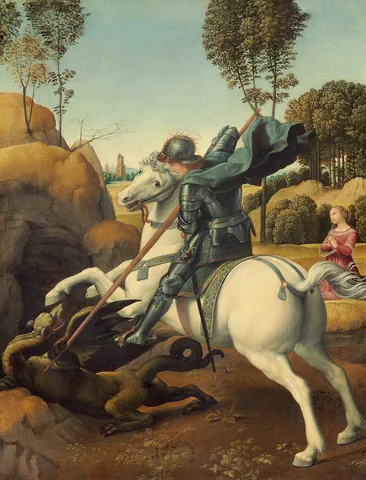 Saint George and the Dragon
Image: Caravaggio; Wikimedia Commons · public domain