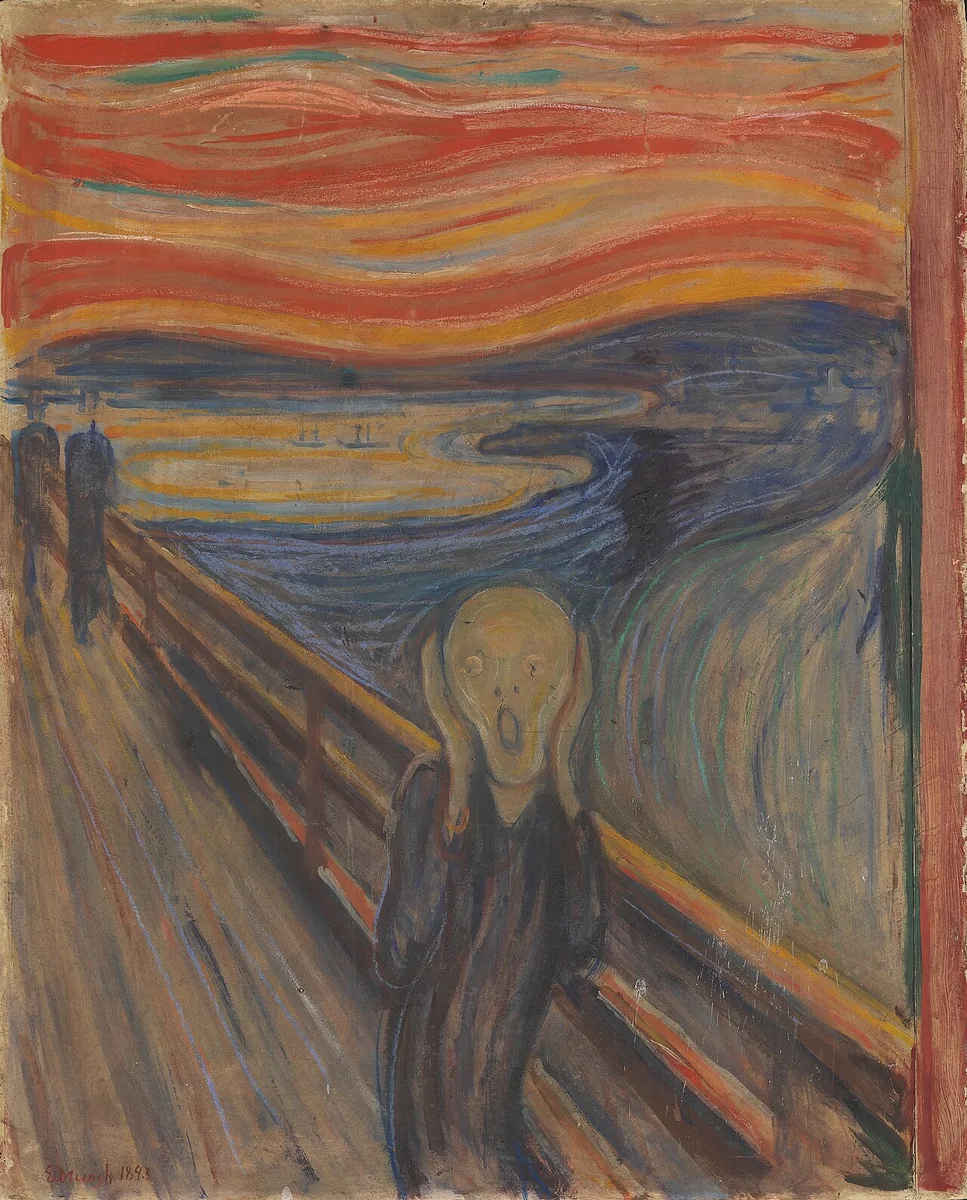
The Scream
Match for you
Rate 5 more paintings to see how well this one matches your taste.
Where to see it
National Museum of Art, Architecture and Design, Oslo
About the painting
The Scream is an image first created by the Norwegian artist Edvard Munch in 1893, and later repeated by him in different versions. The agonized face in the painting has become one of the most iconic images in art, seen as representing a profound experience of existential dread related to the human condition. Munch's work, including The Scream, had a formative influence on the Expressionist movement.
Read more
Munch recalled that he had been out for a walk at sunset when suddenly the setting sun's light turned the clouds "a blood red". He sensed an "infinite scream passing through nature". Scholars have located the spot along a fjord path overlooking Oslo and have suggested various explanations for the unnaturally orange sky, ranging from the effects of a volcanic eruption to a psychological reaction by Munch to his sister's involuntary commitment at a nearby lunatic asylum.
Munch created two versions in paint and two in pastels, as well as a lithograph stone from which several prints survive. Both painted versions have been stolen from public museums, but since recovered. In 2012, one of the pastel versions commanded the highest nominal price paid for an artwork at a public auction at that time.
The Norwegian name of the piece is Skrik ('Scream'), and the German title under which it was first exhibited is Der Schrei der Natur ('The Scream of Nature').
Source: Wikipedia · CC BY-SA 4.0
Similar works
Image: Edvard Munch; Wikimedia Commons · public domain