
The Sea of Ice
Match for you
Rate 5 more paintings to see how well this one matches your taste.
Where to see it
Hamburger Kunsthalle, Hamburg
About the painting
The Sea of Ice (German: Das Eismeer) is an 1823–1824 oil-on-canvas painting by the German Romantic painter Caspar David Friedrich. It depicts Friedrich's interpretation of an Arctic landscape, with a shipwreck half-buried in the ice. Its radical composition and subject matter were unusual for their time and the work was met with incomprehension. It has been retrospectively considered one of Friedrich's masterpieces.
Read more
The Sea of Ice was commissioned by Johann Gottlob von Quandt, who sought two paintings of southern and northern nature. Friedrich's influences are unconfirmed, but he likely drew upon William Edward Parry's 1820–1821 exhibition for the Northwest Passage; he also studied ice floes on the Elbe. Commentators have also linked it to Théodore Géricault's 'The Raft of the Medusa', and speculate it was influenced by the childhood death of Friedrich's brother, who fell through thin ice. The painting was first exhibited at the Prague Academy exhibition of 1824 titled An Idealized Scene of an Arctic Sea, with a Wrecked Ship on the Heaped Masses of Ice, and before 1826 it was called The Polar Sea. The painting was still unsold when Friedrich died in 1840. It is currently held by the Kunsthalle Hamburg in Hamburg.
Source: Wikipedia · CC BY-SA 4.0
Similar works


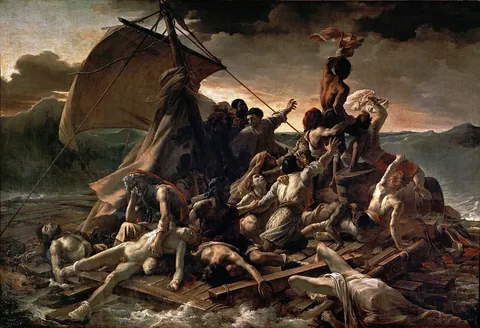




Image: Caspar David Friedrich; Wikimedia Commons · public domain