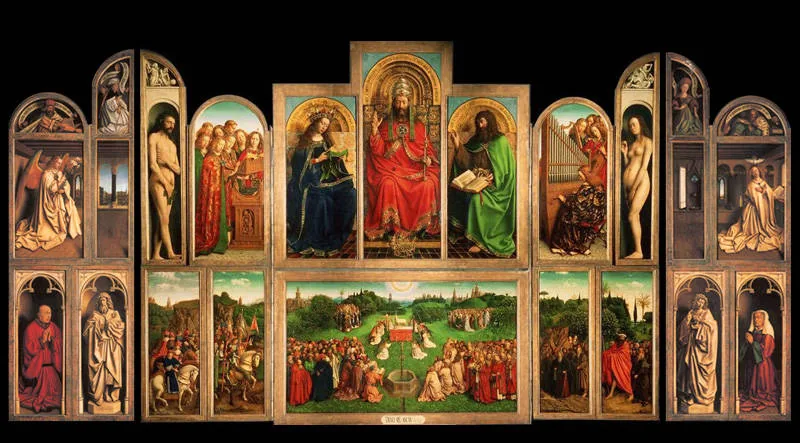
Ghent Altarpiece
Match for you
Rate 5 more paintings to see how well this one matches your taste.
Where to see it
St Bavo's Cathedral, Ghent
About the painting
The Ghent Altarpiece, also called the Adoration of the Mystic Lamb (Dutch: De aanbidding van het Lam Gods), is a very large and complex 15th-century polyptych altarpiece in St Bavo's Cathedral, Ghent, Belgium. It was begun around the mid-1420s and completed by 1432, and it is attributed to the Early Netherlandish painters and brothers Hubert and Jan van Eyck. The altarpiece is a prominent example of the transition from Middle Age to Renaissance art and is considered a masterpiece of European art, identified by some as "the first major oil painting."
Read more
The panels are organised in two vertical registers, each with double sets of foldable wings containing inner and outer panel paintings. The upper register of the inner panels represents the heavenly redemption, and includes the central classical Deësis arrangement of God (identified either as Christ the King or God the Father), flanked by the Virgin Mary and John the Baptist. They are flanked in the next panels by angels playing music and, on the far outermost panels, the figures of Adam and Eve. The central panel of the lower register shows a gathering of saints, sinners, clergy, and soldiers attendant at an adoration of the Lamb of God. There are several groupings of figures, overseen by the dove of the Holy Spirit. The four lower panels of the closed altar are divided into two pairs; sculptural grisaille paintings of St John the Baptist and St John the Evangelist, and on the two outer panels, donor portraits of Joost Vijdt and his wife Lysbette Borluut; in the upper row are the archangel Gabriel and the Annunciation, and at the very top are the prophets and sibyls. The altarpiece is one of the most renowned and important artworks in European history.
Art historians generally agree that the overall structure was designed by Hubert during or before the mid-1420s, probably before 1422, and that the panels were painted by his younger brother Jan. Yet, while generations of art historians have attempted to attribute specific passages to either brother, no convincing separation has been established; it may be that Jan finished panels begun by Hubert.
The altarpiece was commissioned by the merchant and Ghent mayor Jodocus Vijd and his wife Lysbette as part of a larger project for the Saint Bavo Cathedral chapel. Its installation was officially celebrated on 6 May 1432. Much later, for security reasons, it was moved to the principal cathedral chapel, where it remains.
Source: Wikipedia · CC BY-SA 4.0
Similar works
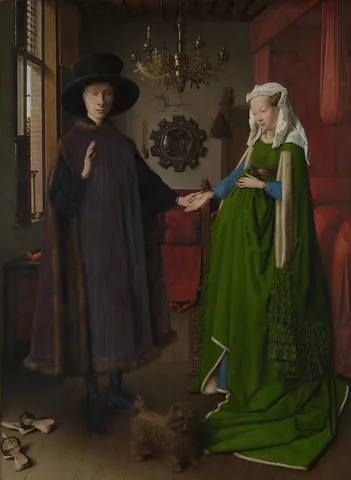 Arnolfini Portrait
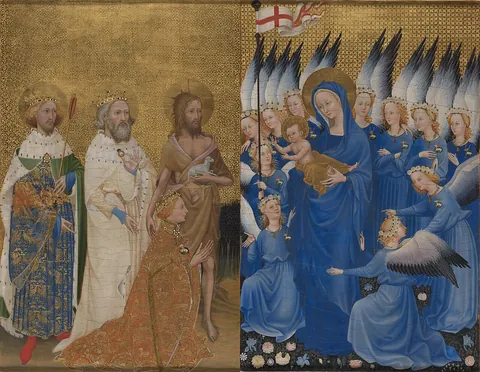 Wilton Diptych
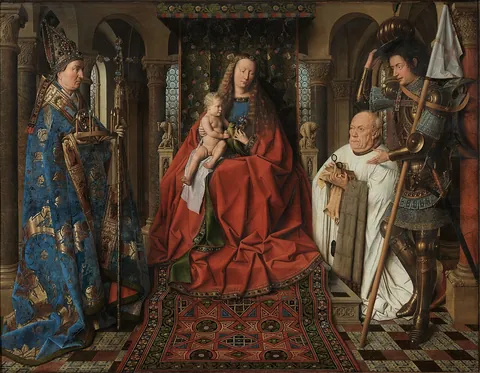 Virgin and Child with Canon van der Paele
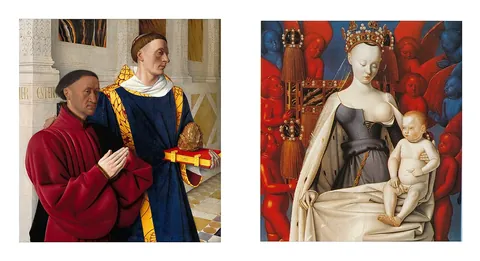 Melun Diptych
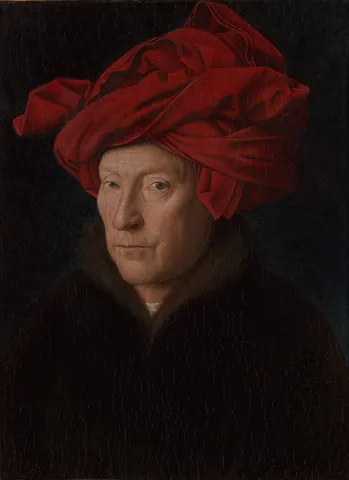 Portrait of a Man
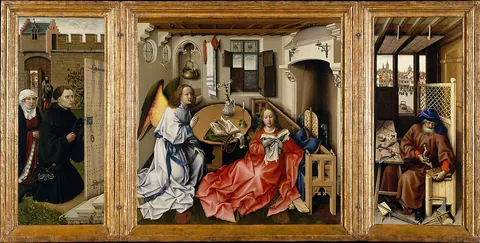 Mérode Altarpiece
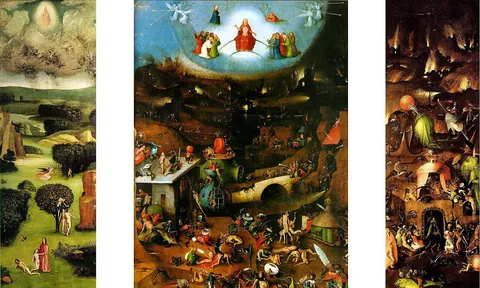 The Last Judgment (Academy of Fine Arts Vienna)
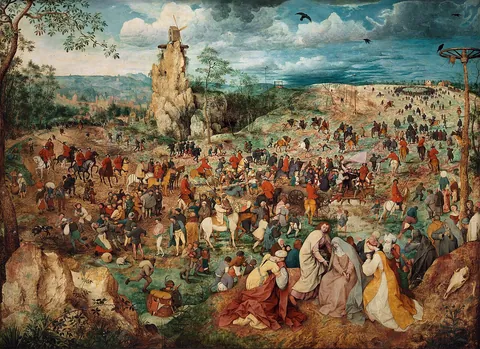 The Procession to Calvary
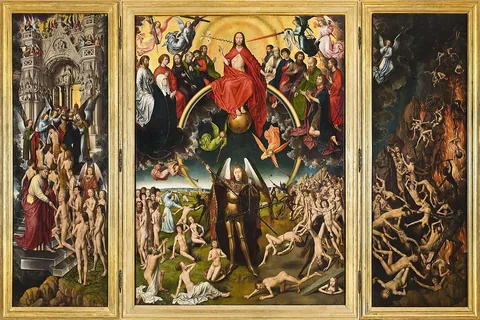 The Last Judgment (National Museum in Gdańsk)
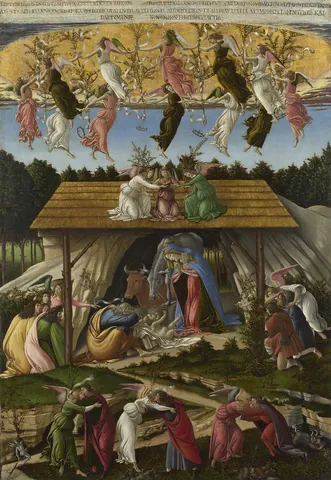 The Mystical Nativity
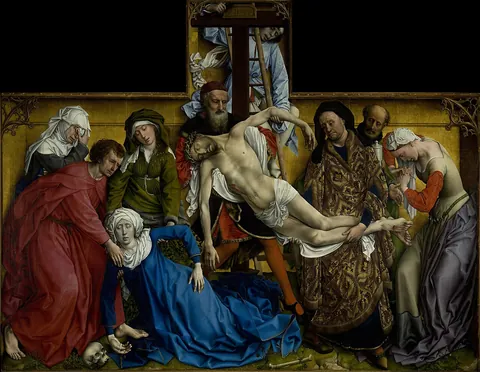 The Descent from the Cross
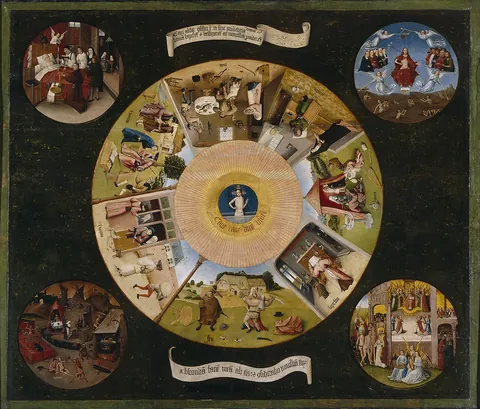 The Seven Deadly Sins and the Four Last Things
Image: Jan van Eyck, Hubert van Eyck; Wikimedia Commons · public domain