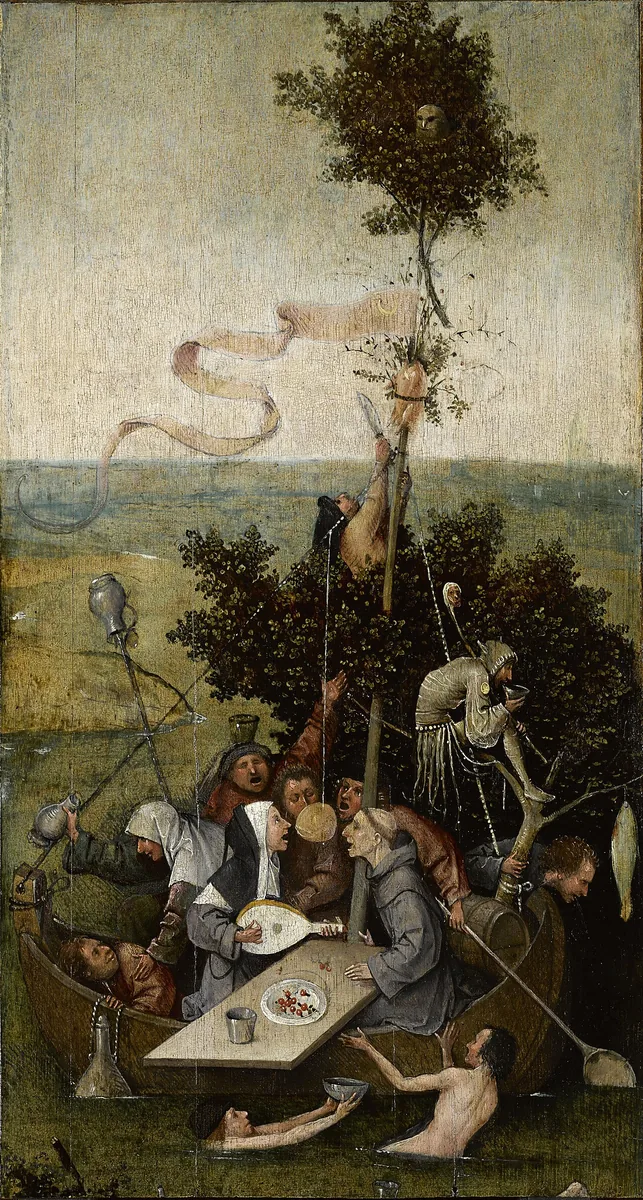
Ship of Fools
Match for you
Rate 5 more paintings to see how well this one matches your taste.
Where to see it
Louvre Museum, Paris
About the painting
Ship of Fools (painted c. 1490–1500) is a painting by the Early Netherlandish artist Hieronymus Bosch (d. 1515), now in the Musée du Louvre, Paris. Camille Benoit donated it in 1918. The Louvre restored it in 2015.
Read more
The surviving painting is a fragment of a triptych that was cut into several parts. This piece, originally part of a larger body of work relating to the seven deadly sins, depicts the sin of gluttony. The Ship of Fools was painted on one of the wings of the altarpiece, and is about two-thirds of its original length. The bottom third of the panel belongs to Yale University Art Gallery and is exhibited under the title Allegory of Gluttony. The other wing, which has more or less retained its full length, is the Death and the Miser, now in the National Gallery of Art, Washington, D.C. The two panels together would have represented the two extremes of prodigality and miserliness, condemning and caricaturing both. The Wayfarer (Rotterdam) was painted on the right panel rear of the triptych. The central panel, if it existed, is unknown.
The Ship of fools is a trope going back to classical times, first recorded as allegory, in Book VI of Plato's Republic, about a ship with a dysfunctional crew. It received a considerable boost in popularity after Sebastian Brant published his satire Das Narrenschiff ("Ship of Fools") in 1493.
Source: Wikipedia · CC BY-SA 4.0
Similar works
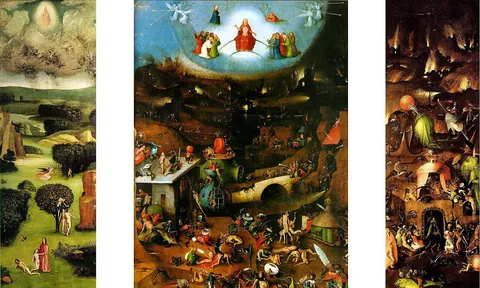 The Last Judgment (Academy of Fine Arts Vienna)
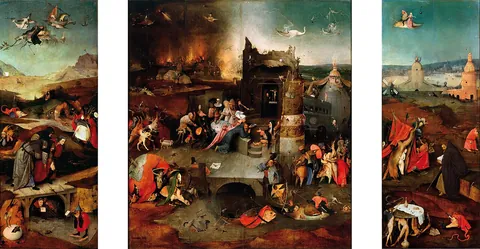 Triptych of the Temptation of St. Anthony
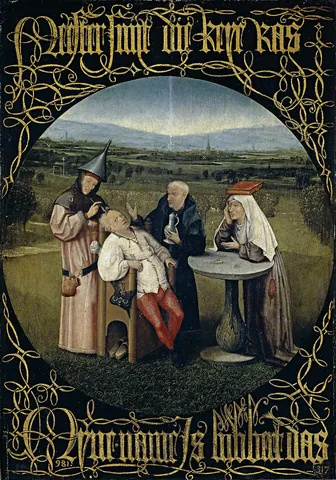 Cutting the Stone
 The Parable of the Blind
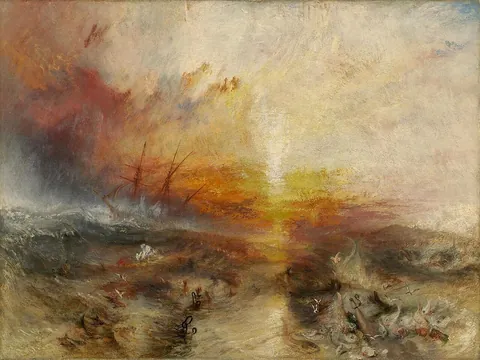 The Slave Ship
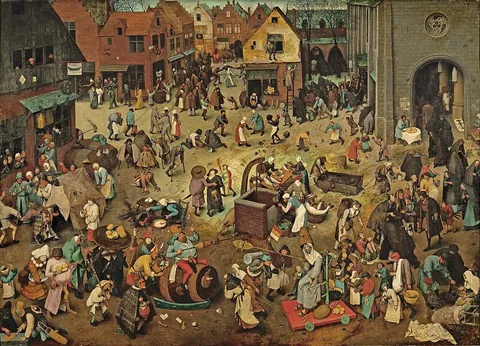 The Fight Between Carnival and Lent
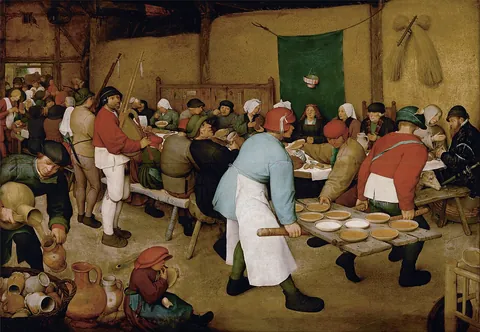 The Peasant Wedding
 The Voyage of Life
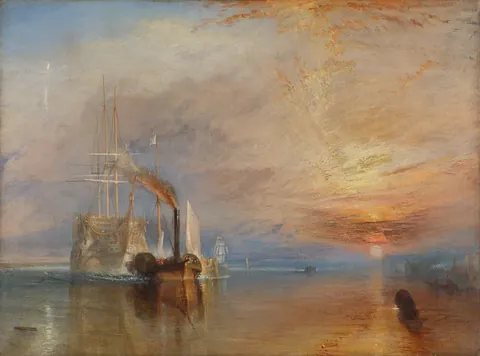 The Fighting Temeraire
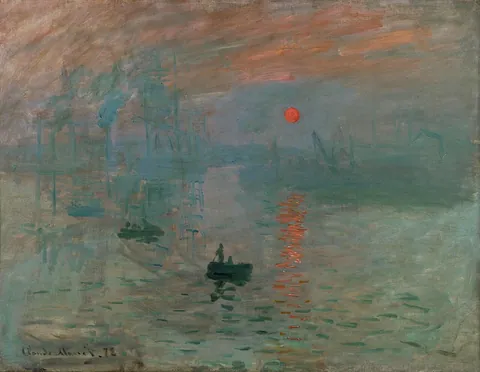 Impression, Sunrise
 The Musicians
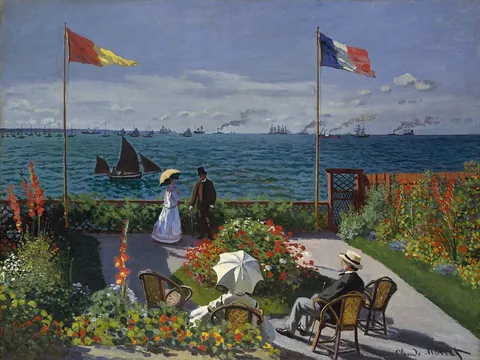 Garden at Sainte-Adresse
Image: Hieronymus Bosch; Wikimedia Commons · public domain