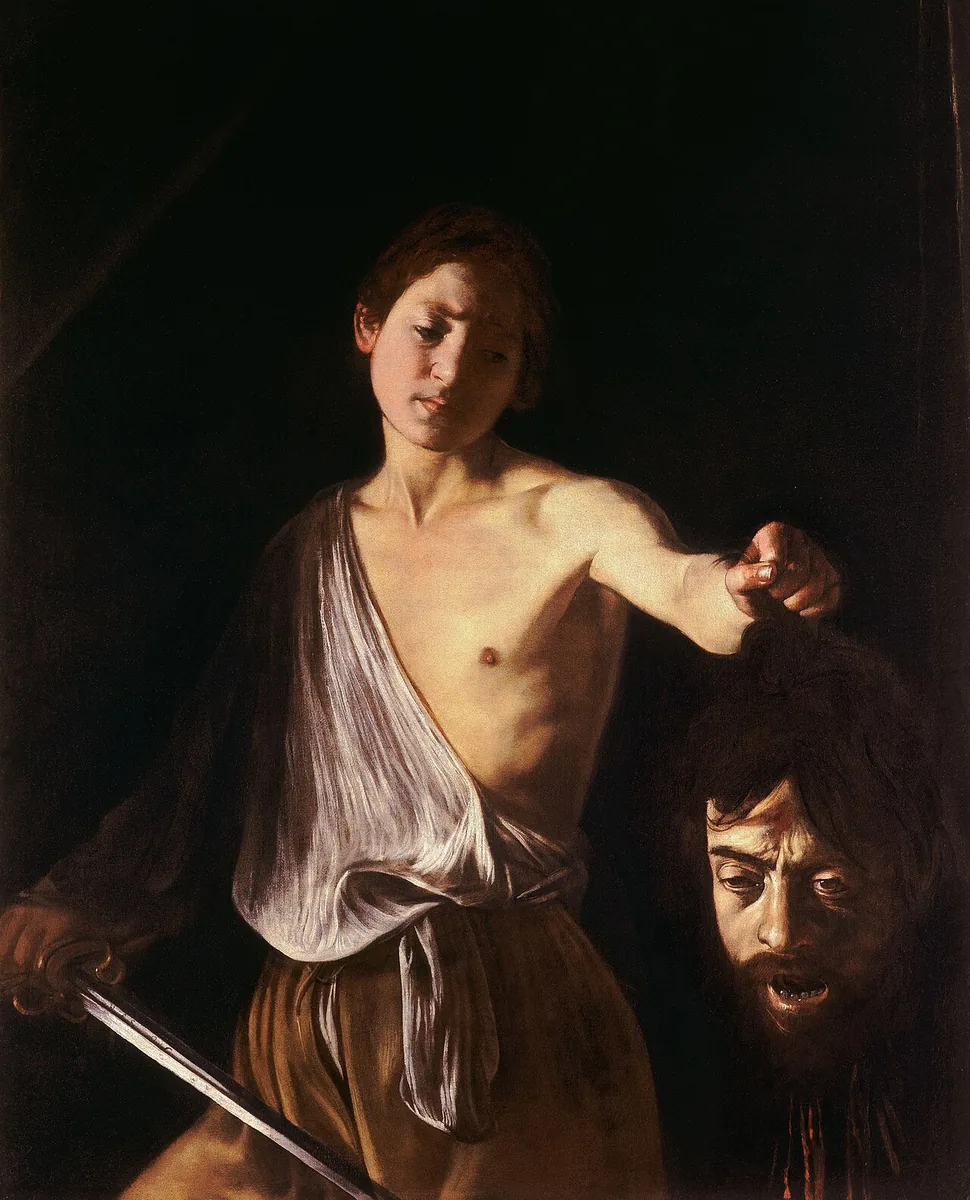
David with the Head of Goliath
Where to see it
Galleria Borghese, Rome
About the painting
David with the Head of Goliath is a painting by the Italian Baroque master Caravaggio. It is housed in the Galleria Borghese, Rome. The painting, which was in the collection of Cardinal Scipione Borghese in 1650, has been dated as early as 1605 and as late as 1609–1610, with more recent scholars tending towards the former.
Read more
Caravaggio also treated this subject in an oil on poplar wood panel dated to c. 1607, now in the Kunsthistorisches Museum, Vienna, and in an earlier oil on canvas dated to c. 1600 in the Museo del Prado, Madrid.
The immediate inspiration for Caravaggio was a work by a follower of Giorgione, c.1510, but Caravaggio captures the drama more effectively by having the head dangling from David's hand and dripped out blood, rather than resting on a ledge. The sword in David's hand carries an abbreviated inscription H-AS OS; this has been interpreted as an abbreviation of the Latin phrase humilitas occidit superbiam ("humility kills pride").
David is perturbed, "his expression mingling sadness and compassion". The decision to depict him as pensive and resigned rather than jubilant creates an unusual psychological bond between him and Goliath. This bond is further complicated by the fact that Caravaggio has depicted himself as Goliath, while the model for David is il suo Caravaggino ("his own little Caravaggio"). This most plausibly refers to Cecco del Caravaggio, the artist's studio assistant in Rome some years previously, recorded as the boy "who lay with him". No independent portraits of Cecco are known, making the identification impossible to verify, but "[a] sexual intimacy between David/model and Goliath/painter seems an inescapable conclusion, however, given that Caravaggio made David's sword appear to project upward, suggestively, between his legs and at an angle that echoes the diagonal linking of the protagonist's gaze to his victim". Alternatively, based on the portrait of Caravaggio done by Ottavio Leoni, this may be a double self-portrait. The young Caravaggio (his own little Caravaggio) wistfully holds the head of the adult Caravaggio. The wild and riotous behaviour of the young Caravaggio essentially had destroyed his life as a mature adult, and he reflects with a familiar hermeticism on his own condition in a painting of a related religious subject.
The masterpiece in Rome is a "twin" of a second artwork on the same subject, David and Goliath, as reported in the inventory of the Galleria Borghese dated 1693, where it is found that one was located in the first room, and the other in the fourth room. According to his biographer Bellori, the artwork had been commissioned to Caravaggio by Cardinal Scipione Borghese in 1606, a work that is possibly performed on a double easel, thus generating two twin masterpieces.
Source: Wikipedia · CC BY-SA 4.0
Similar works
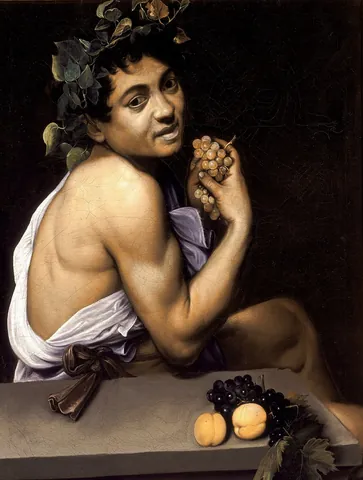 Young Sick Bacchus
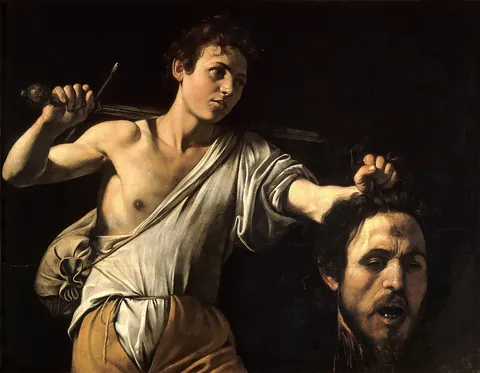 David with the Head of Goliath (Kunsthistorisches Museum)
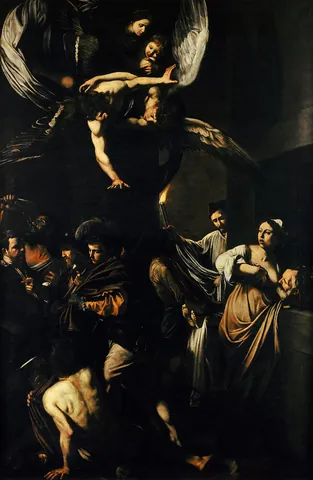 The Seven Works of Mercy
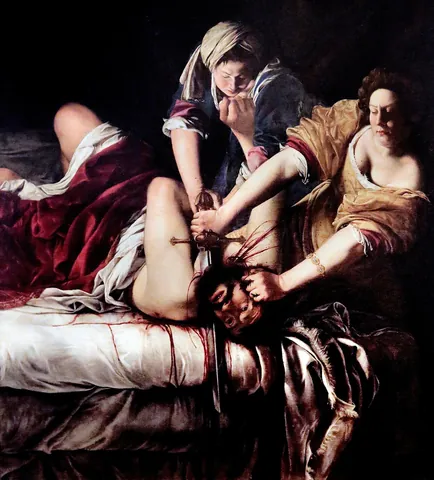 Judith Slaying Holofernes (Uffizi Gallery)
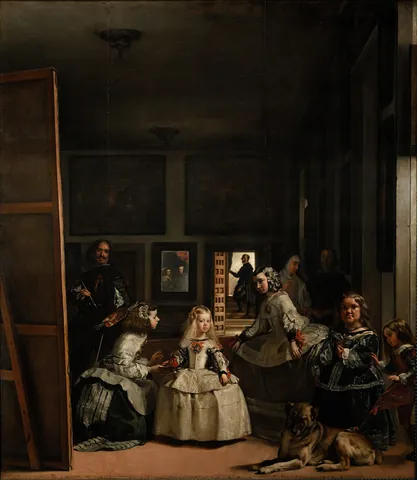 Las Meninas
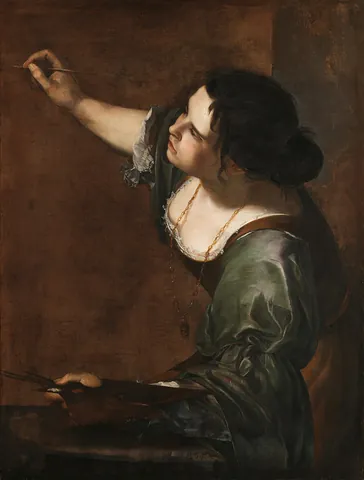 Self-Portrait as the Allegory of Painting
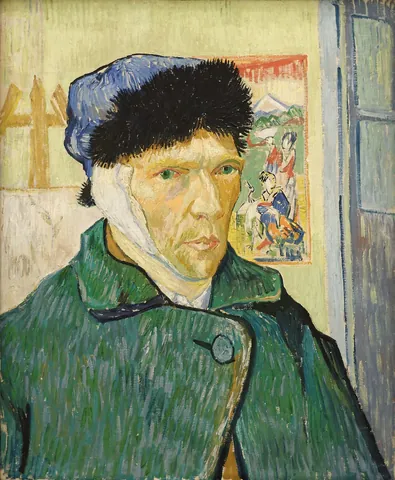 Self-Portrait with Bandaged Ear
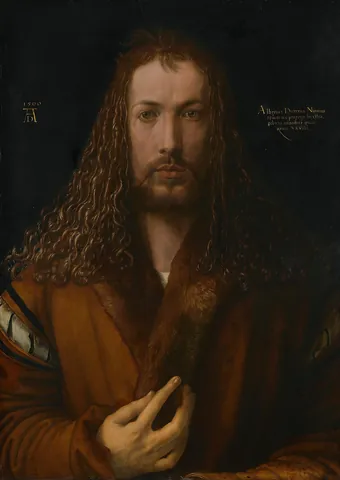 Self-Portrait (Bavarian State Painting Collections)
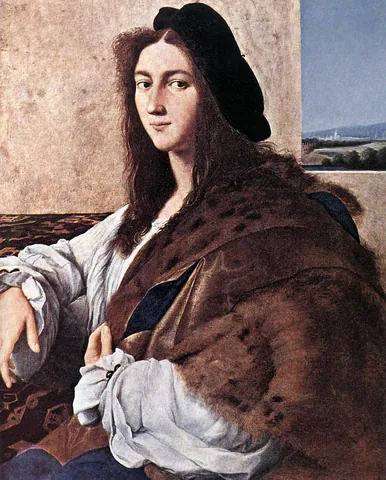 Portrait of a Young Man
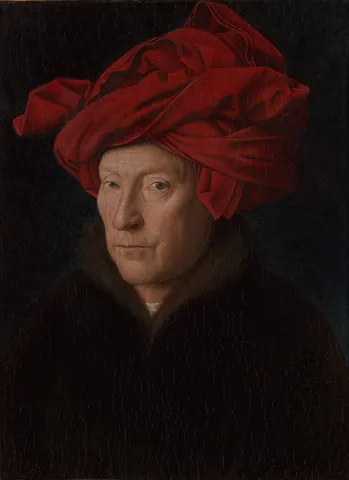 Portrait of a Man
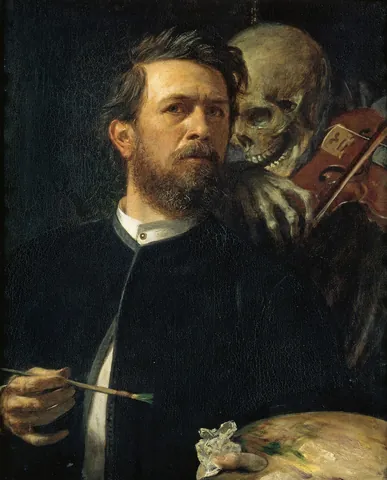 Self-Portrait with Death Playing the Fiddle
 Self-portrait
Image: Caravaggio; Wikimedia Commons · public domain