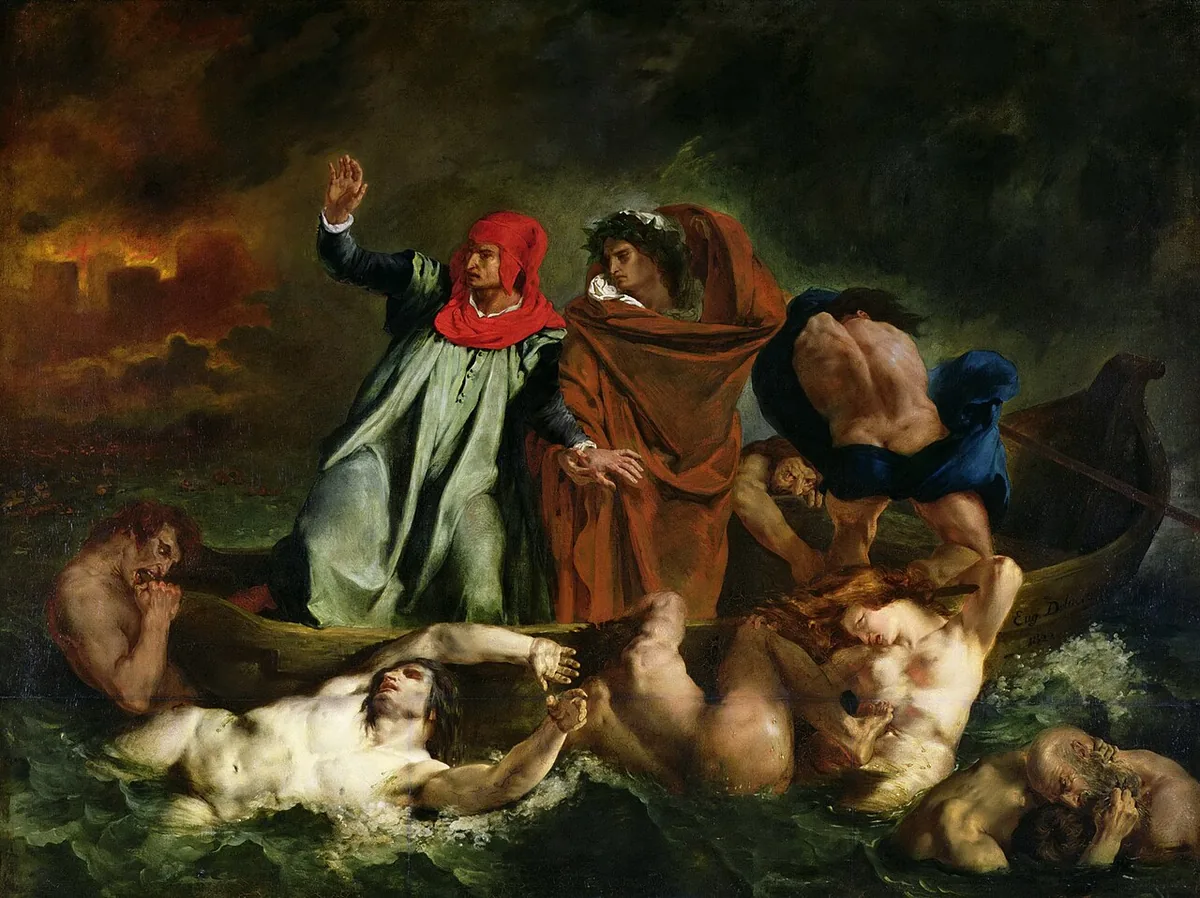
The Barque of Dante
Match for you
Rate 5 more paintings to see how well this one matches your taste.
Where to see it
Louvre Museum, Paris
About the painting
The Barque of Dante (French: La barque de Dante), also known as Dante and Virgil (French: Dante et Virgile), is an 1822 oil painting by the French artist Eugène Delacroix, now in the Louvre. The painting is based on Canto VIII of Dante Alighieri's poem Inferno, depicting Dante and his companion Virgil crossing the river Styx on Phlegyas's boat, onto which damned souls cling.
Read more
The Barque of Dante was Delacroix's first publicly exhibited picture, and his first entry to the Paris Salon. Delacroix had long been interested in the works of Dante, and had previously created an illustration depicting the same scene that would be used in The Barque of Dante. After considering another subject, Delacroix settled on a passage from Inferno that was relatively unknown in France. Delacroix worked on the painting intensively for two and a half months, finishing it a just few days before the Salon. It received a mixed reception at the Salon, while many gave praise the painting, such as Antoine-Jean Gros' favorable comparison to the work of Peter Paul Rubens, others critiqued its loose composition. Despite these criticisms, the The Barque of Dante was purchased from the Salon by the French state for 2,000 francs and placed in the Musée du Luxembourg, guaranteeing its eventual transfer to the Louvre after Delacroix's death.
The figures in the painting were developed from advanced studies, likely of a single model who performed poses inspired by the works of Michelangelo, Rubens, and various other artists. Delacroix scholars have debated the sources and originality of the colors in the painting, with significant comparison having been drawn to Théodore Géricault's The Raft of the Medusa. Delacroix's depiction of water droplets using unmixed, vibrant colors was a significant innovation, and an early example of Delacroix's interest in a "rational" analysis of color.
Source: Wikipedia · CC BY-SA 4.0
Similar works

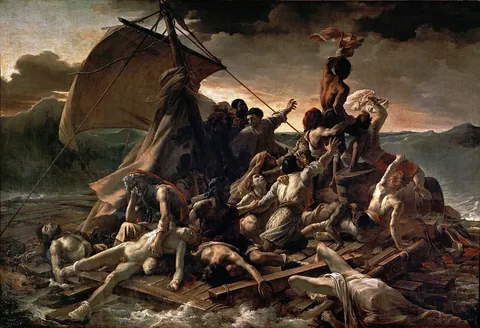

Image: Eugène Delacroix; Wikimedia Commons · public domain